This oral history interview is a project of the Historical Committee of the Outrigger Canoe Club. The legal rights of this material remain with the Outrigger Canoe Club. Anyone wishing to reproduce it or quote at length from it should contact the Historical Committee of the Outrigger Canoe Club. The reader should be aware that an oral history document portrays information as recalled by the interviewee. Because of the spontaneous nature of this kind of document, it may contain statements and impressions that are not factual. A complete transcript is available below the video.
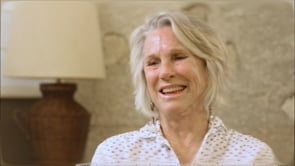
An Interview by Glenna Wong
September 12, 2025
GW: Aloha! Today is Friday, September 12th, 2025. We’re in the boardroom of the Outrigger Canoe Club. I’m Glenna Wong, a member of the club’s historical committee. One of the historical committee’s projects is to do oral histories of longtime members. Today is very special as I’m speaking with Michelle Saint John. Good morning, Michelle.
MSJ: Good morning Glenna.
GW: Could you tell us a little bit about yourself and your family? And if you have any siblings, like where were you born?
MSJ: I was born in Detroit, Michigan, a long way away, and, had a brother or have a brother and, lived there until my father passed away when I was 11 and then moved to Fort Lauderdale, Florida.
GW: Tell us about your grandfather.
MSJ: My grandfather on my mother’s side, started Chris-Craft Boats. And, since we were on a little town called Algonac, Michigan, just outside of Detroit, that’s where the Chris-Craft Boats were started.
GW: And do you remember seeing them or play with them or anything like that? Ride on it?
MSJ: We had one that was called the Michele, and I thought that was kind of special while I was little, certainly. And they were a magnificent boat. I mean, they still are. They’re collectors, all over the country with Chris-Craft Boats, they were just gorgeous. And when my grandfather passed away, the New York Times had done an article on him and called Chris-Craft the Rolls Royce of boats. They were amazing.
GW: So where did you grow up and where did you go to school?
MSJ: Well, when we left Michigan, we went to Fort Lauderdale, and I went to Fort Lauderdale High School there. And, yeah, that’s where we were for about five years until I moved to New York.
GW: Did you participate in sports in high school?
MSJ: I did, not a lot. I was a water skier, and so I’ve been around the water for a long time. And I also did track, and that was it.
GW: Besides your grandfather, was your family active in sports?
MSJ: My family were, well, my father was very involved in boating, and my mother was a golfer. And that was it.
GW: Tell us a little bit about your background. I understand that you’re with Maui Jim, and OluKai.
MSJ: After I came to Hawaii. Oh, yes actually, I moved from New York to here, and became a sales rep. Just by chance, a friend of mine had a company that he was just getting started with, and I wasn’t working and asked me if I would rep for him, and I did, and we became very successful. And we had, like, Swatch watch. What did I have? We had Maui Jim, I was with them for about 22 years. And Mossimo, I don’t know if anybody, anybody who’s going to see this may not have ever heard of the Mossimo apparel line, but that became huge as well. And then, OluKai, Swatch watch, I think I said that, but became a rep.
GW: Both companies very successful. And I’m sure because of your participation and your marketing efforts.
MSJ: You know, it’s funny that you say that because I feel that first of all being in Hawaii, it’s kind of remote and I was able to do my own thing here. And everything got tested here in Hawaii at the Outrigger Canoe Club. So, my friends were the first to, you know, be involved in the Maui Jims and, you know, Swatch watch, all of them. And they liked it.
GW: Now you joined the Outrigger Canoe Club in 1972. How did you come about and discover the Outrigger and what was it that you saw or felt that made you want to join?
MSJ: Oh, that’s a good question. Well, when I was living it, well, when I was still in Michigan, my mother had brought my brother and I to Hawaii. We were in high school, and it was a long time ago. It was a long way away. And I remember when we left, the impact that Hawaii had or Honolulu had made on me at 16, I cried when we left here thinking I would never get here again. I mean, it was a long, way, long time ago, and segue forward, I’m now living in New York, and I had a boyfriend who wanted to come to Hawaii, wanted to bring me, and I thought, oh my goodness, I’m absolutely going to come. And, the boyfriend didn’t work out while we were here. I was on the beach, at, by myself. And, here comes a Hobie cat sailing up to the beach with two guys on it, Gordon Howard and Hal Burchard. And I’m the only one there, and they came up and we chatted, and Gordon, being the good realtor that he was, handed me his card and, they sailed off. And, the person that I was with, left and I was going to say a couple of extra days, and I called Gordon to help me find a hotel. And I ended up staying at the Colony Surf. And so I moved over there in the afternoon, and he took me over to the Outrigger and Muffy Perry was sitting there, Muffy Ohlmeyer, and he introduced me to her and we became fast friends. I mean, instantaneously we’re best friends and they never got rid of me. I’d been around hanging on to their family, you know, 54 years, you know, and aren’t I the lucky one? And, yeah, that was it. And then I commuted for a year back and forth, going to New York. And I knew this is where I wanted to live. I wanted to live here when I was 16, and now I’m getting the opportunity. So, so I moved into the Marco Polo.
GW: What were your earliest memories of the Outrigger Canoe Club?
MSJ: Oh God. Fun. Because at the time I wasn’t working when I first came here so everybody was playing, you know, playing softball. We had our own softball team during the summer across at the park and, in the water constantly. Friends had boats, so we’d sail. That’s where I started canoe paddling when I first got here. It was something that everybody did. We just played.
GW: Any other special memories of other Outrigger members back then?
MSJ: Oh, back then, well, I mean, I knew so many people back then that were outstanding members, you know, because. But they were older than me, but I always had them to look up to. I mean, they, you know, were kind to me and made me feel like I was at home, and I was, for the most part, because what the Outrigger was for me was a home. I mean, right from the get-go, because I had been on my own since I was 18. So, when I left Florida and went to New York, I was all on my own and then came here and lucked out to be introduced to the, to the Outrigger, which has been, I could get weepy here soon, so I won’t.
GW: What did your family think when you moved here?
MSJ: Well, my father wasn’t alive, and my mother and I were really estranged, and my brother had this kind of, a little side thing that when we came to Hawaii and, when we were in high school, it impacted me, Hawaii did, that I wanted to be here. I mean, this is the lifestyle I wanted to have. And for him, he was impacted. He went to the Mormon church, and it impacted him. And he converted and became a Mormon. And then it’s kind of funny because he went off and did his commitment to the church and went to Germany, while I was a Playboy Bunny in New York. So, it was kind of…
GW: Oh, you didn’t mention the Playboy Bunny!
MSJ: Well, yeah, I didn’t hear the question.
GW: How was that?
MSJ: It was a blast. It was so fun.
GW: It sounds like fun. It was all the nightclubs and … costumes.
MSJ: Well, yeah, the course in New York and in the 60s, the late 60s, even hearing me say that, you know, that it doesn’t seem like that was that long ago, but it was, it was a long time ago.
GW: By any chance, do you still have the costume?
MSJ: I have the ears, and I have the tail and the cuffs.
GW: Very good. Smart girl. Now, you mentioned that you started paddling when you first became a member and hung out and who taught you how to paddle?
MSJ: You know, I don’t remember who the back in the ‘70s, I don’t remember, but it was Tom Conner. Tom must have been the first one because we did Molokai in ‘79 and so Tom Conner was the most influential. And then Steve Scott, as time went on, became the next one that was impactful for me.
GW: Were they your coaches? Either one of them?
MSJ: Both of them at different times.
GW: Now, Michel, you were so instrumental in the club service being on many committees, including Board of Directors, Admissions and Membership, Entertainment, House Committee, Judges of Election, Nominating, and Public Relations. Do you have a favorite and do any of these particularly stand out for you?
MSJ: Yeah, they all stand out. No, they don’t all. But Entertainment obviously would be right up my, you know, and everybody that were, the people that were my friends at that time all supported that aspect of what I was doing with the club. And it was, we had a good time, and we were really active and, but my favorite, Admissions. Because by the time I had been a member for a while, and I think they knew they weren’t going to be getting rid of me and how I felt about the club because I talked it up all the time and I know how important it is. And I was honored first that they would ask me to be on it. And I was on it I think the first maybe 4 or 5 years and then I don’t know what I did after that and then got into other parts of it, but it’s an important part of the workings of the club, for sure.
GW: I remember when the club celebrated their centennial here at this location, and you helped gather up some of your paddling gals and did the hula for the club’s luau. And that was fun.
MSJ: Oh for the Luau, for when it was all of us. Well, you are our teacher. Are you kidding? We could not have done it without you.
GW: It was fun, wasn’t it? You guys were great. You were a great coach to get everyone involved.
MSJ: We. And it took four months of all of us, all of our friends. And some that had two left feet and some that just were terribly challenged but showed up for all of the workouts. And, we had a blast. We really had fun.
GW: Now, Michelle, you were also instrumental in growing the sport of paddling for women. Tell me about Na Wahine O Ke Kai. Because the Outrigger won in 1979, and you coached in 2000, coming in I believe third in the Masters in 2012. What else do you have to say about Na Wahina O Ke Kai?
MSJ: Well, because it I was involved, I was somewhat coaching myself to novice before ‘79. But so that were years leading up to the organization of Na Wahine O Ke Kai. And so I was involved in a small way but committed to the development of it and would meet with people from Hui Nalu and the Thompsons and even doing the design for the logo for Na Wahine O Ke Kai. And it was, it was remarkable. I can remember going down to watch the men, the Outrigger men finish men’s Molokai down at the Hilton Hawaiian Village and seeing these guys, you know, and usually Outrigger was doing very well, won, but it was no easy feat. And they’d come in like they had just done back-to-back marathons or something. And it was arduous. It was hard. It was difficult. And so now we were going to attempt that and sort of had that in the back of my head, but we were so prepared for it. We were ready and, we did what we needed to do.
GW: Great, you did great. Tell me about your coaching. Because during your tenure at the Outrigger, you won. The team won five regattas during the regular season, as well as the Oahu and State Championships. Does coaching make a difference and was there something special about your coaching technique that made the club so successful?
MSJ: Oh gosh.
GW: Don’t be shy.
MSJ: No no no no, I mean, obviously, I love the coaching. I mean, I had no idea whether it was going to be good or not, but everybody, they had fun and, that I feel today is a key to having a successful crew. Let me just say this about the novice program that I will carry with me forever is that you get a bunch of women who may have never done a sport, and never done a team sport, going through a divorce, a shy new member to the club, and they sign up for this, whatever it’s going to be. And you see transformations of people. You see them grow. The shy ones now have friends, you know, it’s a unifying sport especially starting with the novice. And then you throw some fun in there for them and hopefully some successes. And a success can be finishing a race. It could be coming in third, second or first. It’s participating in that. And so as far as you know, Liz Perry’s got all of that. I mean it continues on that the thread, especially with the novice, is getting them and loving it. And yeah, that’s it that.
GW: You became the head paddling coach for the club in 1987. And then in 2013, you were named co-chair. Now that seems to be a huge undertaking. Can you tell me about what’s involved with that?
MSJ: Well, being the head coach was, I think, Walter Guild kind of I’ll be there, I’ll support you, I’ll help you, you know. And for that, it was organizing everything, you know, getting the coaches, scheduling for workouts, firing up the troops to get new people to paddle and fill the, and organize the season and, yeah, I’m kind of proud of that. Once the season was over where we won everything, that hearing it back now, yeah, that’s unusual to be able to also do your, you know, the states and the Oahu’s, you know, and do the whole thing. So, I was pleased with that. And when Alice and I were canoe co-chairs, that was, I don’t know, what, five years, ten years later and there were a lot more people getting involved in the whole organization of paddling. And it needed more. And I think computers were now involved too so that helped. But Alice and I, and I got to tell you I think Alice took on the brunt of most of it. I was out yappin’ but we were successful then, you know, we had, and everybody had fun.
GW: Yeah. And we’re lucky that the Outrigger Canoe Club stood behind each and every member with whatever we needed for a race.
MSJ: Yeah. Oh, the club has been, I mean, canoe paddling, obviously and it’s in our, opening of about the club that, you know, having fun with the sea in the way I mean they support they support everybody, to be honest about volleyball everything. And if you need it, the people that run this club are all volunteers. You know, as far as you know, the people you see on the board here. And the people that volunteered to coach and everything is volunteer. It’s pretty remarkable to see, and it keeps getting better and better.
GW: It does. So, Michelle, I just learned that you have a very fitting nickname, and it’s called the Tsunami.
MSJ: Oh, God. How did you hear about that?
GW: I just found out from Josie in the locker room.
MSJ: Oh, that’s so funny.
GW: So, who gave you that nickname? And do you know why? And do you love it or?
MSJ: Yes, I do it. It was Al Lopaka, the singer, the polo player back in the day. And we used to go out and we, we were training on the Ala Wai. So, he’d come and watch us paddle and he’d go, “Go Tsunami!”. And it stuck. And Kissy calls me Tsunami. She has all these years. It was a long time ago. Real long time ago. And yeah, I like it. Yeah, because I kind of get, I think I think it suits me.
GW: Michelle, you were the recipient of the prestigious Winged O in October 2013. Congratulations. How did that feel and what does that represent to you?
MSJ: It’s still, wait a minute, first of all, I mean the Winged O, I always saw the picture of the people that had gotten it and but never understood what it was all about. Until I became, I was more involved and more involved with the club. And a gentleman by the name of Ron Sorrel was sort of the leader and kept that going. And he would say to me, you’re going to get the Winged O. And I’d go, what’s the Winged O? You know, I mean, it didn’t know anything about it’s not something that people go around talking about, but you see the pictures on the award up there. And as time went on and then I got it, it’s really a deep honor that they think enough of me in my involvement in the club to honor me with that. And so it’s, I will continue to always be the steward for the Outrigger Canoe Club. Not that it needs a steward, but.
GW: You’re great Michelle. You’ve paddled in so many canoe races, it’s hard to keep count. On the Outriggers Winged O website about you, I counted 64 races, and I don’t even know when the year that website went up. That’s impressive for any paddler. Do you have anything to add?
MSJ: It’s a lot of training. I mean, yeah, if you live long enough and you’re a paddler, I think there are probably a lot of people out there that paddled more, than we’ve got Bruce Ames, who’s still paddling, still doing Molokai. I mean, it’s pretty amazing. No, I don’t know. It’s a lot of paddling and a lot of great crews and friends along the way and yeah, yeah.
GW: Have you traveled much for paddling and where to and how was it?
MSJ: For paddling, no. I mean, other than going to the States or going to Catalina or, you know, things like that, but that’s not a lot. I mean, I wouldn’t consider that a lot.
GW: How was it? And did you learn anything from it?
MSJ: Yeah, Catalina. The water’s cold. I learned that one really quickly. I think maybe, as the, my involvement in paddling, has grown around the world, that to see how far reaching it is. And, my goddaughter, Paisley Muller, just started paddling in Seattle, and the water’s cold there too, she says. And she just did, this is a year ago, and she just did Catalina. And, I’m just proud of her. And you know, it’s a sport that’s all over the world. We get people from Illinois paddling in the Molokai races. I mean, it’s quite a sport.
GW: Are you still paddling today?
MSJ: Yes.
GW: Do you have a favorite seat and why?
MSJ: Well, I used to. I mean, once I learned how to steer. There aren’t a lot of women steersman. They’re becoming more. But, you know, once you learn how to steer, other people don’t learn, I guess. I don’t know, but I used to paddle two. Two was always my favorite. I still like it. They used to call changes from that seat and now they do it from three. But yeah, I’m a steersman. I like knowing that, by the way. I like having the capability of taking in canoes out and steering and catching waves. I like doing that.
GW: You’re in control.
MSJ: Yeah, I guess.
GW: Which direction you’re heading.
MSJ: Yeah, yeah.
GW: Michelle, do you have a favorite koa canoe from the Outrigger?
MSJ: Oh, the Kekina.
GW: Why is that?
MSJ: She’s a beautiful boat. We paddled in Molokai with her, and we’ve paddled her a lot through the years. And she’s a winning boat. She’s a beauty. Domi’s done a real good job with that boat.
GW: Are there particular regattas that are a favorite of yours?
MSJ: Nanakuli. Well, 4th of July obviously is my absolute favorite. But if it’s not 4th of July, it’s, Nanakuli. It takes you away from Waikiki. The beaches there are stunning, and the water is amazing. It really is. It’s gorgeous. And when we do the E Lau Hoe distance race, it ends there now. It used to end at Pokai Bay, but now it’s at Nanakuli, and it’s coming into that beach from the water. It’s just stunning.
GW: Outrigger was very successful in the Molokai race, the men’s race for a long time. Now the Tahitians seem to be winning every year. Do you know why they’re dominating? Is it the canoe, the paddle, the stroke, the technique. What is it? And do you think Hawaii crews will ever win again?
MSJ: Oh, absolutely. Let me answer that one first. Absolutely they will. It’s hard, the Tahitians, that’s a full-time job. And the people in here in Hawaii, the men, have families, they’ve got jobs, they fit in their training when they can, they don’t get paid to do this. And that right off the bat, is a big discrepancy. My nose is itching, excuse me. That’s impactful. If you know that you work for Shell Va‘a and you can have your training is worked into your work job, it makes it much easier to train and be more committed. Not that, you know, our guys are doing it all. And equipment, equipment’s always going to change. I mean, there’s a new Koa boat that Bradley made, and she’s beautiful. We’ll see what she’s going to do. She just won E Lau Hoe, racing the ultra-lights and the regular canoes. So, we’ll see. And gear is always changing, always. Paddle shape, you know, the bend in the paddles. There’s always going to be something new. And they go out and you see if you can prove that yours is better.
GW: You’ve paddled with some amazing paddlers over the years. What were the strengths of some of your teammates?
MSJ: Oh, wow. Well, I mean, I have to go for the distance crews because that was the most commitment and everybody was committed. And everybody bit the bullet. They did what they needed to do to train. That’s every one of them. You know, we get down to where there’s, you know, going to be ten people on a crew and there’s 12 people. Everybody fought for their seats. And, the coach was the deciding factor on it, you know, and anybody I think could have fit into any of the seats, some of the ones that were, I was the last person picked for our crew for Molokai. And we didn’t know until the morning of Molokai who was going to paddle. That was lovely.
GW: Stressful.
MSJ: Yeah, very. But the commitment everybody had, I’ve never been so committed on anything before that.
GW: Is there anything else you’d like to add about canoe racing that I missed?
MSJ: About canoe racing? I do want to say more about the Outrigger, though. Well, canoe paddling is, it’s amazing sport. And just by the growth of it and commitment and what’s happening around the world, it’s just going to get better and better and better. But, the club. It means so much to me to try and do this and be, this is probably the reason I did the interview is because, it is my family, and it has been from the day that I met Muffy Perry and her family, who are my family now. And as the years have gone on here at the club, I’ve seen my friends get married, I’ve seen them have kids, I’ve seen their kids have kids and watched them all grow up and mature and be involved in the club. And it’s an ohana with the members. It’s an ohana with the people that work here. People work here for 40 years, and it’s not unusual to have that happen. So, I’d like to say thank you with this. I’m feeling silly now. I want to say thank you to the club for having embraced me. And, and yeah, embracing me. I’m sorry. I’m moving around, but that’s all for that. Do you have another question?
GW: Actually, is there anything else that I missed, Michelle?
MSJ: No, no, I don’t think so. I mean, I was thinking about this before I came today. You know, there is so much about the club, as you can tell for me, that, has impacted me. I just want people that are members to really honor the club and everything they do. And that’s with bringing new members, that they add to the membership and the club and bring their A-game to it, which, you know, you see every day. And, and that’s all. And I thank you. I’m glad you were over there talking to me.
GW: Well, thank you, Michelle. Mahalo.